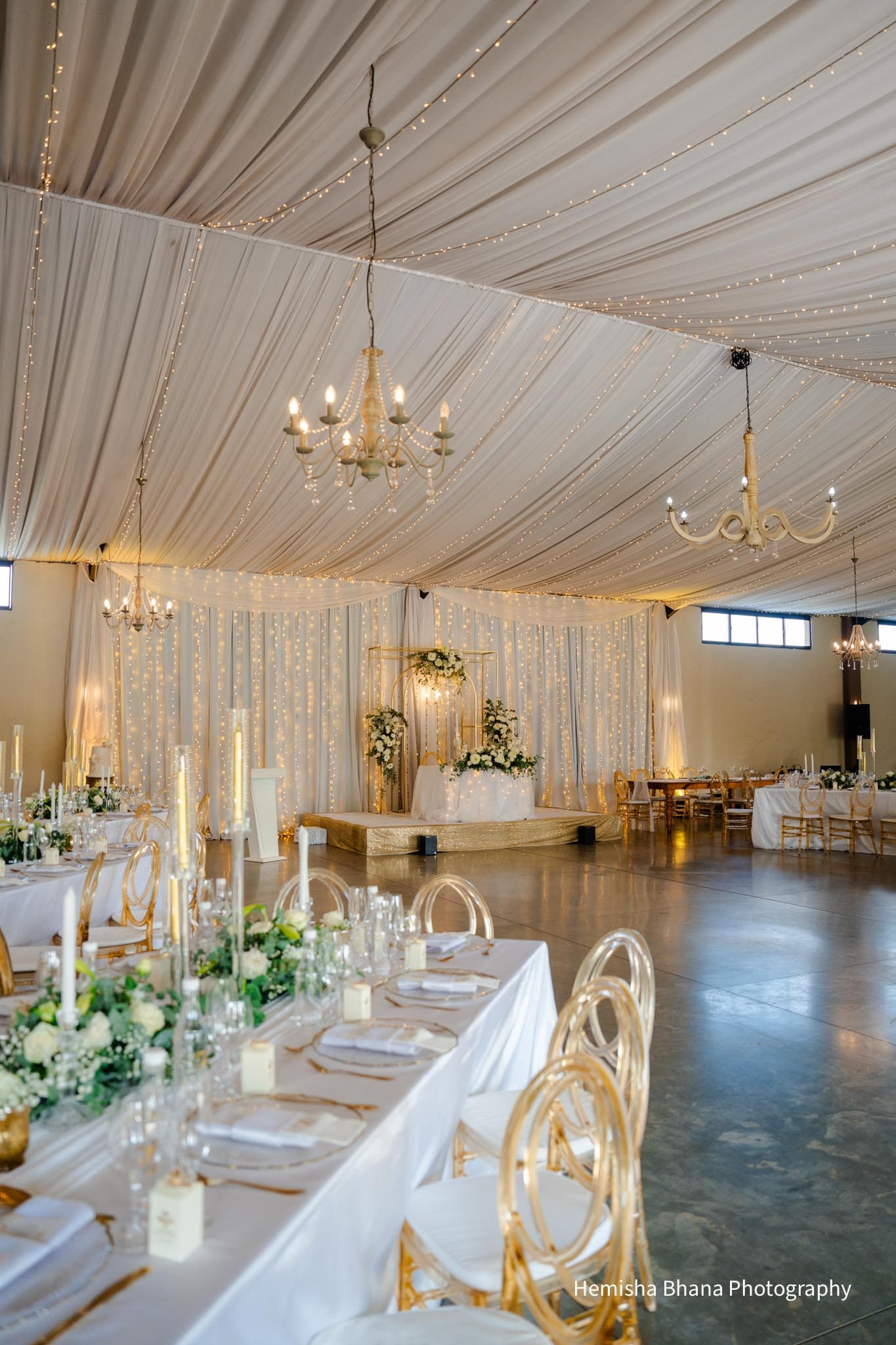
15 Questions to Ask on a Wedding Venue Tour (That Most Couples Forget)
Heading to a venue tour? Here are the 15 most important questions to ask — including the ones most couples only think of after signing the contract.
15 Questions to Ask on a Wedding Venue Tour (That Most Couples Forget)
A venue tour feels exciting. You are walking through beautiful spaces, imagining your guests in the chairs, picturing your first dance in the hall. The coordinator is warm and enthusiastic. The gardens are stunning. Everything feels perfect.
And then, three months after signing the contract, you discover the venue charges R75 per person for corkage, the music must stop at 11pm, and there is no power supply at the ceremony spot for your harpist.
The venue tour is not just a viewing — it is your due diligence meeting. The questions you ask (and the answers you get) will determine whether your wedding day runs smoothly or becomes a logistical headache.
Here are 15 questions we recommend every couple asks — including the ones that most people only think of after it is too late.
The Obvious Ones (That Still Need Asking)
1. What exactly is included in the venue hire fee?
This sounds basic, but the answer varies enormously between venues. Some venue hire fees include tables, chairs, linen, crockery, cutlery, glassware, and basic decor. Others give you an empty hall and four walls.
Ask for a detailed, written list. Then ask what is not included, because that list is often more revealing. Common exclusions: ceremony setup, garden furniture, heaters, fans, AV equipment, and post-midnight security.
2. What are the per-person package options, and what does each include?
Most wedding venues offer tiered packages. Get the specifics: how many courses, what menu options, is the welcome drink included, is the toast included, do they provide a cake stand and knife?
More importantly: what is the price difference between tiers, and what do you actually get for the upgrade? Sometimes the jump from a mid-tier to a premium package adds a lot of cost for minimal tangible difference.
3. Are there minimum guest count requirements?
Many venues enforce minimums on Saturdays and public holidays. If you are planning an intimate wedding of 40 guests but the venue requires a minimum of 80 on a Saturday, you will either pay for 80 regardless or need to choose a different day.
Ask about minimums for each day of the week and each season. Midweek and off-season weddings often have lower (or no) minimums, which can represent significant savings.
4. What is the payment schedule and cancellation policy?
Understand exactly when payments are due, what percentage is non-refundable, and what happens if you need to postpone. Post-pandemic, most couples are rightly cautious about cancellation terms.
A fair venue will offer a reasonable postponement policy (moving your date without losing your deposit) and a clearly staged payment plan rather than demanding large sums upfront.
The Ones Most Couples Forget
5. How many events do you host on the same day?
This is critical and often overlooked. Some larger estates host two or even three weddings simultaneously in different spaces. If your venue is also hosting a corporate function or another wedding on the same property, you may encounter shared parking, overlapping music, and a divided coordination team.
There is nothing inherently wrong with multi-event venues — they often offer better pricing because of the volume. But you need to know in advance, and you need to understand how the spaces are separated.
6. What happens if it rains?
If the venue offers outdoor ceremonies, this question is essential. Ask to see the actual backup space — not just hear about it. Is it large enough for your guest count? Does it still feel special, or is it clearly a compromise? Will moving indoors affect your timeline?
The best answer is a venue that has a permanently covered outdoor structure — open sides with a solid roof — that gives you the outdoor atmosphere without the weather risk. The worst answer is "we'll sort it out on the day."
7. What time does everything need to end?
Some venues have strict curfews due to noise regulations or neighbourhood agreements. If the music must stop at 11pm and the venue cleared by midnight, your timeline needs to account for that from the start.
Also ask: what happens if we run over? Is there an overtime fee per hour, or is it simply not allowed? And does the end time refer to when the music stops, or when the last guest leaves?
8. Who is our point of contact on the day?
During the planning phase, you might work with one coordinator. On the day itself, a different staff member might manage operations. Ask: who will physically be at our wedding, how experienced are they, and can we meet them before the day?
The coordinator managing your wedding day is one of the most important people in the entire operation. You want someone who knows the venue, knows your plan, and can make real-time decisions under pressure.
9. Can we do a tasting before committing to a menu?
Most reputable venues offer a menu tasting for the couple (and sometimes parents) as part of the booking process. If a venue does not offer tastings, that is a yellow flag — it suggests they are not confident in their kitchen, or they are a pure venue-hire model with external caterers.
If external catering is an option, ask whether there are approved caterer lists and whether the venue charges a kitchen-use fee.
10. What is the alcohol arrangement?
South African wedding venues typically operate on one of these models: in-house bar at venue prices, bring-your-own (BYO) with a corkage fee per bottle, or a combination. The cost differences are substantial.
Ask: what is the corkage fee? Is it per bottle opened or per bottle brought in? Do you provide glassware and bar staff, or do we need to arrange that separately? Can we provide our own wine and spirits but use your bar service?
This single question can save (or cost) you thousands of rands.
11. Where do guests go between the ceremony and reception?
The gap between the ceremony ending and the reception starting (typically 60 to 90 minutes while the bridal party does photos) is the most under-planned part of most weddings. If your guests are standing in a parking lot with nothing to do, the energy drops.
Ask: is there a pre-reception area with shade, seating, and a bar? Is this space included, or is it an add-on? Can we set up a welcome drinks station with canapes here?
The best venues design this transition space intentionally — a garden lounge, a terrace, or a shaded lawn area with a mobile bar and background music.
12. What are the setup and teardown windows?
If your ceremony is at 3pm on Saturday, what time can your decor team access the venue to start setting up? Friday evening? Saturday morning at 8am? Saturday at noon? The answer dramatically affects your decor options, your stress levels, and often your decor costs (tighter windows mean more labour needed).
Similarly, when must everything be removed? Sunday morning? Sunday evening? Must you use a specific decor company, or can anyone access the venue?
13. Is there accommodation on-site, and what is included?
On-site accommodation is a significant convenience factor, especially in South Africa where drink-driving enforcement is strict and ride-hailing availability varies outside urban centres.
Ask: how many rooms, what are the rates, and is there a block booking discount? Is the honeymoon suite included in the wedding package? What time is checkout, and does that conflict with Sunday teardown?
If the venue does not offer on-site accommodation, ask about partnerships with nearby guesthouses and whether transport can be arranged.
14. What are the rules around music, decor, and vendors?
Some venues have approved vendor lists that restrict your choice of photographer, DJ, or florist. Others give you complete freedom. Neither approach is inherently better — approved lists often mean the vendors know the venue well, while open lists give you more control over quality and pricing.
Also ask about decor restrictions: can you use real candles (or only LED)? Can you attach anything to walls or ceilings? Are confetti, rice, or flower petals allowed? Can you use pyrotechnics or indoor sparklers?
15. Can I see a recent wedding setup in this space?
Photos on a website are curated. Ask to see the most recent wedding setup — not the styled shoot from two years ago. If possible, ask whether you can visit on a day when a wedding is being set up (not during the event, obviously) to see the space in action.
Alternatively, ask the venue if they can connect you with a couple who recently married there. A conversation with someone who has been through the experience is worth more than any brochure.
A Final Tip: Trust Your Gut
Data and checklists are important, but so is intuition. After every venue tour, ask yourselves two questions: did the coordinator make us feel genuinely cared for (not just sold to)? And can we picture our people — our family, our friends — being happy in this space?
If the answer to both is yes, and the logistics and budget align, you have probably found your venue.
At Riverside Country Estate, we encourage every couple to ask every one of these questions — and any others that matter to you — during your venue tour. Our coordinators Zuné, Hein, and Tracy are here to give you honest, complete answers. No pressure, no rush, just coffee and a walk through the gardens.
Riverside Country Estate is a wedding and event venue in Springs, Gauteng, hosting weddings for 30 to 350 guests. View our packages →
Frequently asked questions
What are the most important questions to ask on a wedding venue tour?
The most important questions cover exclusivity (are other events running on your day?), what is included in the hire fee, whether an on-site coordinator is provided, capacity for your guest count, and accommodation options for the wedding party. Most couples forget to ask about the wet weather contingency plan and what time the music must stop.
Should I ask about catering on a venue tour?
Yes. Ask whether catering is in-house or external, what the per-person pricing includes, whether there is a minimum spend, and whether the venue has a licensed bar. Venues with in-house catering typically give you more cost certainty than those that require separate caterers.
What should I check about the ceremony space on a venue tour?
Check the capacity of the ceremony space, whether it is sheltered or exposed to weather, what the acoustics are like for vows and music, whether there is a backup indoor space, and how far guests need to walk between the ceremony and reception. Also check where the photographs will be taken.
Ready to start planning your event at Riverside?