Outdoor Wedding Venues in Gauteng: Why a Wetland Setting Creates Unforgettable Photos
Discover why outdoor wedding venues near water and wetlands in Gauteng produce the most stunning wedding photography.
Outdoor Wedding Venues in Gauteng: Why a Wetland Setting Creates Unforgettable Photos
There is a reason that the most-shared, most-pinned, most-saved wedding photographs almost always feature natural light and open landscapes. Indoor venues can be beautiful, but there is something about an outdoor ceremony — the play of light through trees, the depth of a natural backdrop, the way a breeze lifts a veil — that creates images with genuine emotional weight.
Gauteng might not be the first province that comes to mind when you think of natural beauty. It is landlocked, urban, and flat in many areas. But tucked between the highways and housing developments are pockets of extraordinary landscape: the Magaliesberg foothills, the Cradle of Humankind ridgelines, the Vaal riverbanks, and — less well known but arguably most striking — the wetland systems of the East Rand.
This article explores why outdoor venues near water produce such compelling wedding photography, what to consider when planning an al fresco ceremony in Gauteng, and how to work with the province's climate rather than against it.
The Science of Why Water Backdrops Work
Photographers will tell you that the three ingredients of a great wedding portrait are soft light, depth, and colour contrast. Water and wetland settings deliver all three naturally.
Reflected light. A river, dam, or wetland acts as a natural reflector, bouncing soft light upward into faces. This reduces harsh shadows under eyes and chins — the same effect that portrait photographers achieve with expensive reflector boards. At golden hour (roughly 4pm to 5:30pm in Gauteng's winter, 5:30pm to 7pm in summer), the reflected light off water turns warm and amber, wrapping the couple in what photographers call "liquid gold."
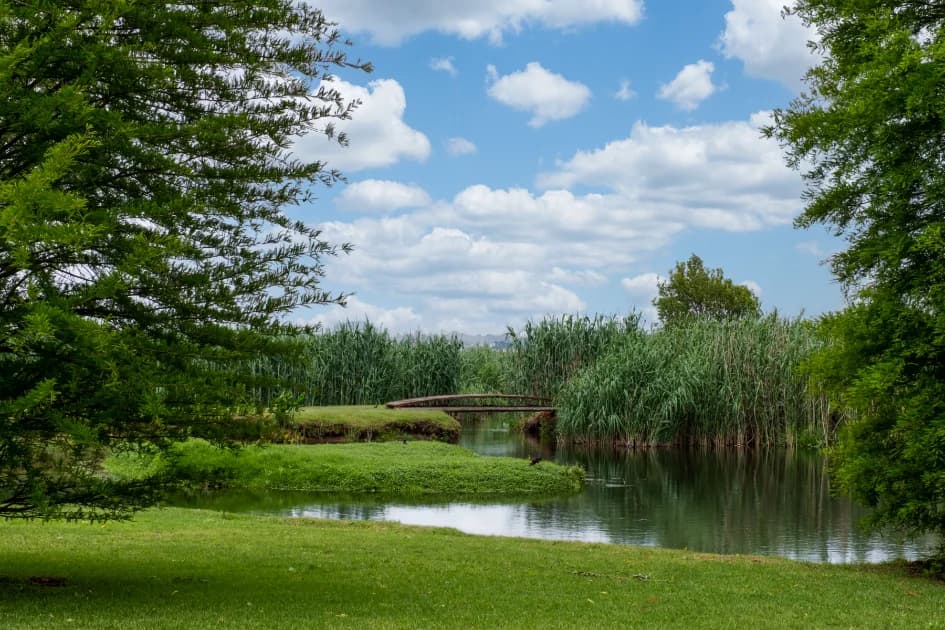
Layered depth. A flat garden or a blank wall gives you a two-dimensional backdrop. A wetland or riverscape gives you layers: reeds in the foreground, water in the middle ground, trees on the opposite bank, and sky behind. These layers create depth that makes photographs feel three-dimensional and cinematic.
Natural colour palette. Wetlands offer a colour palette that shifts with the seasons — emerald greens and deep blues in summer, golden yellows and russet browns in autumn, silver greys and pale greens in winter. These natural tones complement almost every wedding colour scheme without competing with it.
Gauteng's Outdoor Venue Landscape
Gauteng's outdoor wedding venues broadly fall into four categories:
Country estates and garden venues make up the largest category, particularly in the Muldersdrift corridor and the northern suburbs. These typically offer manicured lawns, established trees, and purpose-built outdoor ceremony structures. The settings are controlled and predictable, which is their strength — you know exactly what you are getting.
Bushveld and game lodge venues are found on the fringes of the province, particularly toward the Magaliesberg and the Dinokeng area north of Pretoria. These offer a wilder, more untamed aesthetic with indigenous bush as the backdrop. Stunning for couples who want something rugged and uniquely South African, though the bush setting can limit photo variety.
Riverside and waterfront venues are rarer in Gauteng simply because the province has fewer rivers than coastal regions. The Vaal River in the south and the various tributaries of the East Rand's Blesbokspruit system are the main options. These venues offer the water-reflection advantage described above and tend to attract abundant birdlife, which adds atmosphere and movement to both the ceremony and the photographs.
Rooftop and urban outdoor venues exist in Johannesburg and Sandton for couples who want open-air without the country drive. The city skyline can be dramatic at sunset, though you trade nature's soundtrack for traffic noise.
Planning an Outdoor Ceremony in Gauteng's Climate
Gauteng's climate is both a blessing and a challenge for outdoor weddings. The province enjoys more than 300 days of sunshine per year, but those remaining days tend to be dramatic — summer afternoon thunderstorms can roll in fast and hit hard.
October to March (summer/rainy season): The mornings are typically clear and warm, with cloud build-up from midday and storms arriving between 2pm and 5pm. If you are set on a summer outdoor ceremony, schedule it either early (before 11am) or late (after 5pm, once storms have passed). The air after a Highveld thunderstorm is clean and cool, and the light often turns extraordinary — vivid sunset colours against retreating storm clouds.
April to September (winter/dry season): Gauteng winters are dry, sunny, and crisp. Rain is extremely unlikely. The trade-off is temperature — mornings and evenings can drop to single digits. A 3pm or 4pm winter ceremony hits the sweet spot: warm enough for comfort, with golden-hour light arriving just in time for photos. Many photographers consider Gauteng's winter light the best in the country for outdoor portraiture.
The non-negotiable backup plan: Regardless of season, any venue offering outdoor ceremonies in Gauteng must have a covered or indoor backup space. Do not accept "we'll put up a tent if it rains" unless you have seen the tent and it genuinely accommodates your full guest count with dignity. The best venues have permanent covered structures — a chapel with a roof but open sides, or a verandah that doubles as a ceremony space — that preserve the outdoor feeling while keeping everyone dry.
What Makes a Wetland Venue Different
A wetland is not just a river or a dam. It is a living ecosystem — a place where water, land, and sky meet in a way that changes with the light, the season, and the time of day. The Blesbokspruit in Springs, for example, is one of only a handful of Ramsar-listed wetlands in South Africa, which means it has been internationally recognised for its ecological significance.
What does this mean for your wedding? Several things:
Birdlife. Wetlands attract an extraordinary diversity of birds. The Blesbokspruit is home to herons, kingfishers, ibises, and seasonal migrants. The sound of birdsong during a ceremony is something guests consistently mention in reviews — it creates an atmosphere that no DJ or string quartet can replicate.
Seasonal transformation. Unlike a manicured garden that looks the same year-round, a wetland shifts. Summer brings lush reeds and full canopies. Autumn turns the willows and poplars golden. Winter strips the deciduous trees back to architectural silhouettes against wide blue skies. Each season offers a completely different visual palette for your photographs.
Scale and sky. Wetland venues tend to sit in open landscapes with expansive sky views. This is important for photography — it gives your photographer room to shoot wide, dramatic compositions with big skies, as well as intimate close-ups. The combination of scale and detail is what separates "nice photos" from "extraordinary photos."
Sunset access. Because wetlands occupy low-lying, open terrain, they typically have unobstructed western horizons. This means you get the full sunset — not a partial glow behind a tree line, but the complete arc of colour from horizon to zenith. For couples who want that one iconic sunset portrait, a venue with open western views is worth its weight in gold.
Practical Considerations for Outdoor Venues
Beauty aside, outdoor venues come with logistical realities that you need to plan for:
Footwear and terrain. Will your guests walk on paved paths, gravel, or grass? Stiletto heels and soft lawn do not mix. Provide a path or consider the terrain when advising your guests on attire. Some venues offer heel protectors or paved walkways for exactly this reason.
Insect management. Waterside venues in summer will have mosquitoes at dusk. Citronella candles, plug-in diffusers, and providing insect repellent for guests are simple solutions that make a big difference. A good venue will already have these measures in place.
Sound. Outdoor ceremonies need amplification. A small Bluetooth speaker is not enough for 100-plus guests. Ask whether the venue provides a ceremony sound system or whether your DJ needs to set up for the ceremony as well.
Wind. Gauteng is not typically a windy province, but open landscapes can channel breezes. Discuss wind management with your decor team — tall centrepieces, loose fabric draping, and unsecured paper items are all wind-vulnerable.
Shade. Gauteng's UV index is high, even in winter. If your ceremony is before 4pm, ensure there is shade for your guests. Parasols, established trees, or a covered structure are essentials, not luxuries.
Choosing the Right Time of Year for Your Outdoor Wedding
Based on our experience hosting hundreds of outdoor ceremonies, here is our honest assessment of each period:
Peak season (September to November): Spring in Gauteng is magnificent — everything is green, the jacarandas bloom in October, and the weather is warm without being hot. Rain risk is moderate (increasing as November arrives). This is the most popular period, so book early.
High summer (December to February): Hot, dramatic, and unpredictable. The light is harsh at midday but extraordinary at golden hour. Storm management is critical. Best for couples who are flexible with timing and love dramatic skies.
Autumn (March to May): Warm days, cool evenings, dramatically reduced rain risk by April. The foliage turns golden. Arguably the most consistently beautiful period for outdoor weddings in Gauteng, and often more affordable than peak season.
Winter (June to August): Dry, guaranteed sunshine, incredible light. Cold mornings and evenings. Perfect for afternoon ceremonies that transition into cosy indoor receptions. The bare trees create a romantic, minimal aesthetic that photographs beautifully in black and white.
The Takeaway
An outdoor wedding in Gauteng is not a compromise — it is a choice to let nature play a starring role in your day. And among the many options available, venues near water and wetland systems offer something that manicured gardens and bushveld lodges simply cannot: the combination of reflected light, layered depth, living soundscapes, and seasonal drama that transforms good wedding photos into ones that take your breath away.
If you want to see what a Ramsar wetland backdrop looks like in person — and stand where hundreds of couples have said their vows overlooking the Blesbokspruit — come visit us at Riverside Country Estate. We will put the coffee on and let the setting speak for itself.
Riverside Country Estate is set on the banks of the Blesbokspruit in Springs, Gauteng — the province's only Ramsar-listed wetland. Our Open Air Chapel overlooks the river and is available for ceremonies year-round. Explore our spaces →
Frequently asked questions
What makes an outdoor wedding venue near water special?
Water features — rivers, wetlands, and dams — create natural reflections, birdsong, and a sense of place that is impossible to replicate indoors. Couples and photographers consistently rate waterside venues as producing the most distinctive and memorable wedding images because the setting itself becomes part of the story.
What is a Ramsar wetland?
A Ramsar wetland is a wetland of international importance designated under the Ramsar Convention, a global treaty for the conservation of wetland ecosystems. Riverside Country Estate sits on the Blesbokspruit, which is Gauteng's only Ramsar-listed wetland — making it a genuinely unique natural setting that no other wedding venue in the province can offer.
Are outdoor wedding venues in Gauteng weather-dependent?
Gauteng has one of the most predictable weather patterns in South Africa — dry and sunny from May to September, with summer rain typically falling in short afternoon thunderstorms from October to April. Responsible outdoor venues always have a covered or indoor contingency plan, which at Riverside includes the option to move the ceremony to covered areas.
Ready to start planning your event at Riverside?